
Hardwood floors are one of the most durable surfaces you can put in a home, but they do have one vulnerability: the finish. The wood itself can last generations. The finish is what takes the daily abuse, and if you’re cleaning your floors the wrong way, you may be wearing it down faster than you realize.
The good news is that proper hardwood floor care is not complicated. It mostly comes down to knowing what to avoid.
Sweep or Vacuum First, Every Time
Before you introduce any moisture to your hardwood floors, remove the dry debris. Dirt, grit, and sand are abrasive. When you mop or wipe over them without sweeping first, you’re essentially dragging sandpaper across your finish. Over time, this creates the dull, scratched appearance that makes older floors look worn out even when the wood itself is fine.
Use a soft-bristle broom or a microfiber dust mop for daily maintenance. If you prefer vacuuming, make sure your vacuum is set to the hard floor setting, which disengages the rotating brush bar. A spinning brush bar can scratch the finish, particularly on softer wood species.
Use as Little Water as Possible
Water is hardwood’s biggest enemy. It can seep into the seams between planks, cause the wood to swell and warp, and degrade the finish over time. This means traditional wet mopping is out.
When your floors need more than a dry sweep, use a barely damp microfiber mop. Wring it out thoroughly before it touches the floor. The surface should dry within a minute or two of mopping. If it’s staying wet longer than that, your mop is too wet.
Never use a steam mop on hardwood floors. Steam drives heat and moisture directly into the wood and the seams, and it can cause permanent warping and finish damage. Most hardwood flooring warranties are voided by steam mop use. At Flooring.org, product pages include finish and warranty details for every product we carry, so you know exactly what’s covered and what to avoid before your floors are ever installed.
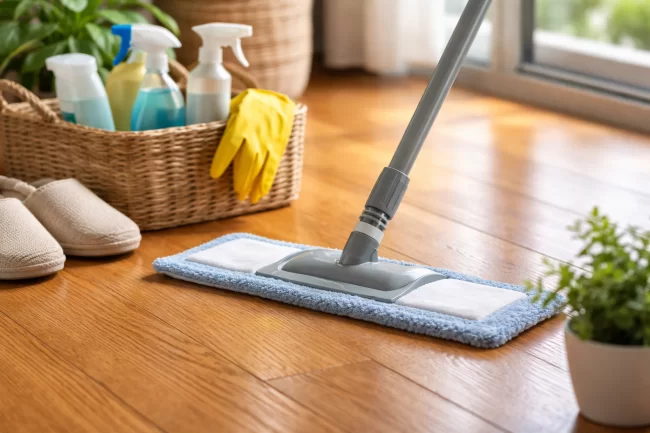
Avoid the Wrong Cleaning Products
Walk down the cleaning products aisle and you’ll find no shortage of options marketed toward hardwood floors. Not all of them are safe for your specific finish, and some are actively harmful.
Products to avoid: vinegar and water mixtures (the acidity eats away at finish over time despite being a popular DIY recommendation), oil soaps like Murphy Oil Soap (they leave a residue that builds up and dulls the finish), ammonia-based cleaners, and anything with wax if your floors have a polyurethane finish. Wax and polyurethane don’t play well together and can make future refinishing much more difficult.
Stick to a pH-neutral hardwood floor cleaner designed for your finish type. Not sure what finish your Flooring.org floors have? Check your order details or reach out to our team and we’ll point you in the right direction.
Handle Spills Immediately
Spills happen. The key is response time. Wipe up any liquid spill as soon as it occurs using a dry or barely damp cloth. Don’t let it sit. Even a small amount of liquid left on hardwood for an extended period can leave a white haze, a stain, or cause the wood to swell around the edges of the affected plank.
For sticky spills, dampen a cloth slightly and work from the outside of the spill inward to avoid spreading it. Follow with a dry cloth to remove any remaining moisture.
Protect the Finish Before You Have to Repair It
Cleaning is only part of the equation. How you treat your floors day to day has a direct impact on how long the finish lasts.
Put felt pads under all furniture legs and replace them when they wear out or collect debris. Use area rugs in high-traffic zones like hallways, entryways, and in front of kitchen sinks. Trim pet nails regularly. Take shoes off at the door, particularly heels, which concentrate significant weight on a tiny surface area and can dent even harder wood species.
One advantage of shopping at Flooring.org is that every product listing includes species hardness ratings and finish durability details, so you can match the right floor to the right room from the start rather than discovering limitations after installation.
Know When It’s Time to Refinish
Even with perfect maintenance, hardwood floor finishes eventually wear down. Signs that your finish needs attention include visible scratches that catch light, dull patches that don’t respond to cleaning, water that no longer beads on the surface, or bare wood showing through in high-traffic areas.
Solid hardwood floors can typically be sanded and refinished multiple times over their lifespan. Engineered hardwood can be refinished depending on the thickness of the wear layer. Catching finish wear early means a lighter refinishing job and lower cost. Waiting until the wood itself is damaged is a much more involved repair.
If you’re not sure whether your floors are due for refinishing or just need a deeper clean, our team at Flooring.org is happy to help you assess. And if it is time for new floors, you’ll find a wide selection of pre-finished hardwood at prices well below what you’d pay at a traditional retailer. Contact us today to learn more.
The finish is what makes hardwood floors look the way they do. Take care of it, and the floors will take care of themselves for decades.