If you’re researching hardwood flooring cost, you’re already ahead of the game. Understanding what drives pricing before you shop means you won’t get surprised at checkout or caught off guard by an installer’s quote. This guide breaks down the real numbers behind hardwood flooring prices, from material selection to final installation, so you can plan your project with confidence.
What Drives the Price of Hardwood Flooring?
Solid vs. Engineered: The First Cost Decision
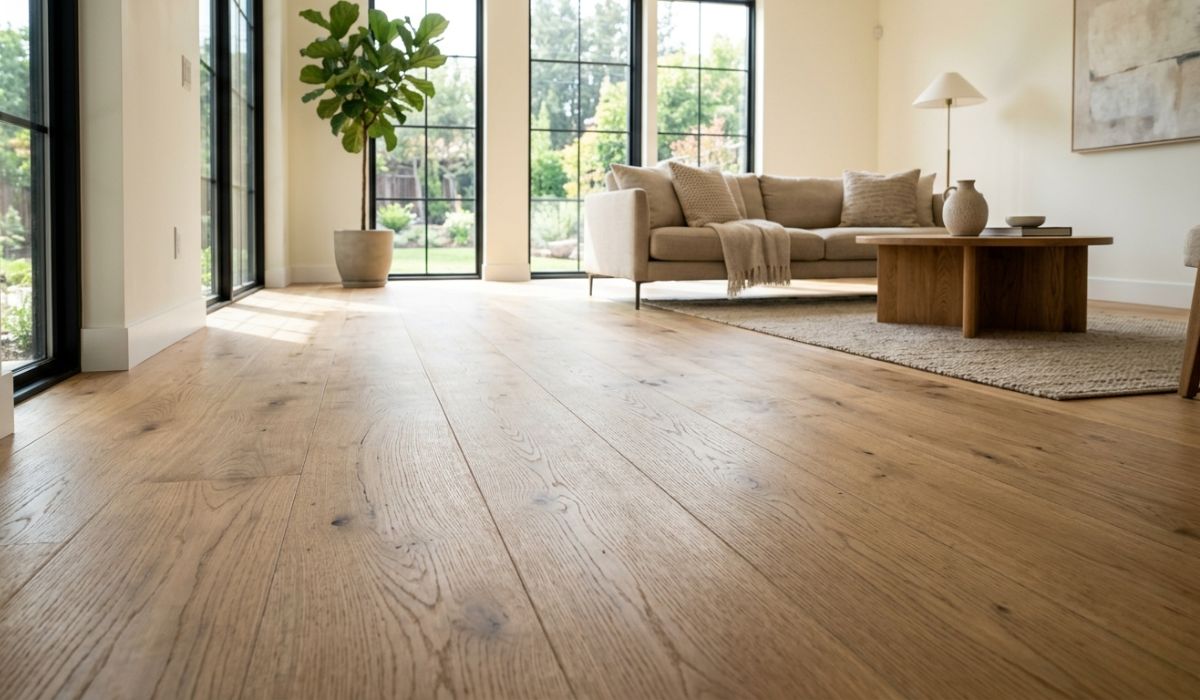
Before you look at species or finish, you need to decide between solid and engineered hardwood. This choice has a direct impact on your material cost and where in your home the floor can go.
Solid hardwood runs roughly $4 to $12 per square foot for materials and can be sanded and refinished 5 to 10 or more times over its lifetime. Engineered hardwood typically costs $3 to $10 per square foot and offers better performance in moisture-prone spaces, over radiant heat, or below grade. Both are real wood. The difference is construction, not quality.
For a full breakdown of how these two options compare across refinishing potential, moisture tolerance, and installation compatibility, the solid vs. engineered hardwood comparison at Flooring.org is worth reading before you commit to either direction.
Wood Species and What They Cost
Species is the single biggest variable in hardwood floor prices. Domestic hardwoods are widely available and more affordable. Exotic species command a premium due to longer supply chains and limited availability.
| Species | Hardness (Janka) | Typical Material Cost (per sq ft) |
|---|---|---|
| Red Oak | 1,290 lbf | $4 – $7 |
| White Oak | 1,360 lbf | $5 – $9 |
| Maple | 1,450 lbf | $4 – $8 |
| Hickory | 1,820 lbf | $5 – $10 |
| Walnut | 1,010 lbf | $7 – $14 |
| Brazilian Cherry / Exotic | Varies | $8 – $18+ |
Oak is the most popular choice for good reason. Its pronounced grain hides minor scratches and everyday wear well. White oak takes stain more evenly than red oak and leans cooler in tone, making it the better pick for modern and transitional interiors. Hickory is the toughest option available and a smart investment for households with kids and pets. Walnut brings a richness few species can match but is softer, so it shows wear more readily in high-traffic areas.
Grade: Where You Can Save Without Sacrificing Quality
Hardwood flooring grade describes the appearance of the board face, not its structural quality or durability. This is one of the most misunderstood aspects of hardwood pricing, and one of the biggest opportunities to save money.
- Select/Clear: Minimal knots, consistent color. The most expensive grade.
- #1 Common: Moderate natural character, some small knots. A mid-range price with broad appeal.
- #2 Common: Heavy character, prominent knots, strong color variation. Rustic and full of life, at the lowest price point.
A #2 Common white oak plank performs identically to a Select white oak plank underfoot. The difference is purely visual. For buyers who love a natural, lived-in look, character grades deliver the same durability at a meaningful discount.
Plank Width and the Wide Plank Premium
Standard hardwood planks run 2.25 to 3.25 inches wide. Wide plank flooring, anything 4 inches and above, has become increasingly popular and commands a noticeable price premium.
Why the premium? Wider boards require larger, older trees to produce clear, knot-free lumber. Expect to pay roughly 20 to 40 percent more than standard-width boards in the same species and grade. The visual payoff is significant. Wide planks show off the natural grain more dramatically and make smaller rooms feel larger.
Prefinished vs. Site-Finished: How Finish Affects Cost
Prefinished hardwood arrives from the factory with a UV-cured aluminum oxide coating that is harder and more durable than anything applied on-site. It is immediately ready to walk on after installation, produces no fumes, and is what the vast majority of online hardwood buyers choose. For most projects, it is the better value.
Site-finished (unfinished) hardwood is sanded and finished after installation, which allows for full stain customization and a seamless surface appearance. The trade-offs are real: plan for 3 to 5 additional days of work, professional labor for sanding and finishing, and a waiting period before the space can be used. The added cost of on-site finishing typically runs $1.50 to $3.00 per square foot on top of standard installation labor.
Finish sheen also factors into the overall look. Matte and satin finishes are the most popular choice today. They show fewer footprints and smudges and photograph more naturally. Semi-gloss and high-gloss finishes are more formal and reveal traffic patterns more readily over time.
The Cost to Install Hardwood Floors
Materials are only part of the equation. Professional installation typically adds $3 to $8 per square foot, depending on your region, subfloor condition, installation method, and project complexity.
The three primary installation methods each carry different labor implications:
- Nail-down: The traditional method for solid hardwood over wood subfloors. Durable and long-lasting, but not beginner-friendly.
- Glue-down: Common for engineered hardwood over concrete. Creates a solid, stable result but is permanent.
- Float/click: The most accessible DIY option for engineered hardwood with click-lock edges. Can significantly reduce labor cost for confident DIYers.
One cost factor that surprises many buyers is subfloor preparation. The subfloor must be clean, flat within 3/16 of an inch over 10 feet, and at proper moisture levels before installation begins. Leveling or repairing a problem subfloor can add meaningful cost to any project. Get this assessed before finalizing your budget.
Full Project Cost: What to Actually Budget
| Project Tier | Material Cost (per sq ft) | Installed All-In (per sq ft) |
|---|---|---|
| Entry-level engineered | $3 – $5 | $6 – $10 |
| Mid-range engineered or solid | $5 – $9 | $9 – $15 |
| Premium solid / wide plank / exotic | $10 – $18+ | $15 – $26+ |
For a 500 square foot room, a mid-range hardwood with professional installation typically runs $3,500 to $8,000 all-in. Always add 10 percent to your material order for waste from cuts. Rooms with angles or diagonal runs require up to 15 percent overage. Underordering risks a dye-lot mismatch if you need to reorder later.
How Buying Online Changes the Math
Traditional flooring showrooms carry significant overhead, and that overhead is factored into every price you see. Buying directly through an online retailer removes that markup entirely.
At Flooring.org, the direct-to-consumer model means pricing runs 20 to 40 percent below what traditional retailers and big-box stores charge for comparable quality. On a 1,000 square foot project, that difference can be several thousand dollars, sometimes enough to cover professional installation entirely.
Before placing a full order, order samples first. This is the most important step in the online buying process. See the color in your actual lighting, feel the finish texture, and confirm it works with your trim and cabinetry. The complete guide to buying hardwood flooring online walks through exactly how to do this right, from reading product specs to calculating your order quantity correctly.
Hardwood vs. Other Flooring: Is the Cost Worth It?
| Flooring Type | Material Cost (per sq ft) | Refinishable | Lifespan |
|---|---|---|---|
| Solid Hardwood | $4 – $18+ | Yes, 5–10+ times | 50 – 100+ years |
| Engineered Hardwood | $3 – $12 | Yes, 1–3 times | 25 – 50 years |
| Luxury Vinyl Plank | $2 – $7 | No | 15 – 25 years |
| Laminate | $1 – $5 | No | 10 – 25 years |
| Carpet | $1 – $5 | No | 5 – 15 years |
Laminate and vinyl cost less upfront, but neither can be refinished when they wear out. They get replaced entirely. Solid hardwood, properly maintained, can outlast every other flooring option in your home. The cost per year of useful life often makes hardwood the most economical long-term choice. Homes with hardwood floors also consistently command higher sale prices and spend fewer days on the market than comparable homes with carpet or vinyl.
Frequently Asked Questions
How much does hardwood flooring cost per square foot installed?
All-in costs for materials and professional installation typically range from $6 to $26 per square foot, depending on species, grade, finish, plank width, and your location. Mid-range domestic hardwood with standard installation runs $9 to $15 per square foot for most projects.
Is it cheaper to install hardwood floors yourself?
Choosing a float/click engineered hardwood and installing it yourself can eliminate $3 to $8 per square foot in labor cost. That said, proper subfloor preparation and wood acclimation are non-negotiable steps that require knowledge and patience. Skipping them is the leading cause of hardwood floor failures and can void manufacturer warranties.
What is the most affordable hardwood flooring option?
Entry-level engineered hardwood in a domestic species like oak or ash, purchased in a character grade (#1 or #2 Common), and bought directly from an online retailer rather than a showroom, gives you the lowest entry price without sacrificing genuine hardwood performance. These grades perform identically to Select grade underfoot.
Does hardwood flooring increase home value?
Yes. Homes with hardwood floors consistently command higher sale prices and spend fewer days on the market than comparable homes with carpet or vinyl. Hardwood is one of the few flooring investments that pays back at resale rather than simply being a sunk cost.
How much overage should I order?
Add 10 percent to your measured square footage for standard rooms. If your installation runs diagonal, or the room has many angles and doorways, plan for 15 percent overage. Underordering risks a dye-lot mismatch if you need to reorder from a new production run.
Ready to move forward? The complete hardwood flooring guide at Flooring.org covers everything from species selection and finish types to installation methods and caring for your floors long-term. When you’re ready to shop, browse the full product selection or reach out for a personalized quote.